If your sugar report came back high, or your doctor said the word “borderline”, it is normal to feel worried. Then the advice starts. A neighbour swears by one thing, a WhatsApp forward says another, and everyone has a “sure-shot” cure.
One question we hear often at our Delhi clinic is simple: can homeopathy help with diabetes?
This guide gives you an honest answer in plain words. You will also learn what diabetes is, which symptoms to watch for, how doctors test for it, and which daily habits matter most.
Quick Answer: Can Homeopathy Treat Diabetes?
Homeopathy can be used as supportive care next to your doctor’s treatment, but it should never replace insulin or diabetes medicines. Scientific evidence that homeopathy lowers blood sugar is limited. What is proven to control diabetes is healthy food, regular activity, a healthy weight, regular tests and the medicines your doctor prescribes.
Key points to remember:
- Diabetes means blood sugar stays high for a long time. Type 2 is the most common kind.
- Doctors diagnose it with a blood test. A fasting sugar of 126 mg/dL or more, or an HbA1c of 6.5% or more, points to diabetes.
- Never stop or change your diabetes medicine on your own.
- Food, walking and weight matter more than any single remedy.
- If you want homeopathic care, tell both of your doctors about each other.
What Is Diabetes?
Diabetes is a long-term health condition in which sugar (glucose) stays too high in your blood. In India, people often call it “sugar” or madhumeh.
Here is how it works. The food you eat turns into glucose, and your body uses that glucose for energy. A hormone called insulin, made by an organ called the pancreas, moves glucose from your blood into your cells. According to the World Health Organization (WHO), diabetes happens when the pancreas does not make enough insulin, or when the body cannot use the insulin it makes in the right way.
Think of insulin as a key and your cells as locked doors. If there are too few keys, or the locks stop working, sugar stays outside in the blood.
High blood sugar does not hurt much at first. But over the years it can damage the nerves, blood vessels, eyes, kidneys and heart. This is why early checks and steady care matter so much.
Types of Diabetes
There are four main groups, and each one needs a different kind of care.
| Type | What happens in the body | Who it affects | Usual care |
| Type 1 | The body makes very little or no insulin | Often starts in childhood or young age | Daily insulin, always under a doctor |
| Type 2 | The body cannot use insulin well | Mostly adults, but now seen in children too | Diet, exercise, weight control, and often medicines |
| Gestational | Blood sugar rises during pregnancy | Pregnant women | Regular checks and a doctor’s plan |
| Prediabetes | Sugar is above normal but not yet in the diabetes range | Many adults, often without symptoms | Lifestyle changes and regular tests |
More than 95% of people with diabetes have type 2, says WHO. People with prediabetes are at high risk of getting type 2 diabetes, but it is not certain. Early changes in food and activity can slow or stop that path.
Diabetes in India: The Numbers
About 1 in 9 adults in India lives with diabetes, and many more are heading that way. The biggest national study so far is the ICMR-INDIAB study, published in The Lancet Diabetes & Endocrinology in 2023. It surveyed 113,043 adults aged 20 and above, in every state, between 2008 and 2020 (South First report).
• 101 million people in India had diabetes. That is 11.4% of the population.
• 136 million more had prediabetes, which is 15.3%.
• The rate ranged from 4.8% in Uttar Pradesh to 26.4% in Goa.
• Diabetes was common in cities across the country.
The world picture is similar. WHO says the number of adults with diabetes grew from 200 million in 1990 to 830 million in 2022. More than half of them were not taking any medicine for it.
Why does this matter to you? Because type 2 diabetes can stay quiet for years. Many people find out only when a complication has already started. A simple blood test can catch it much earlier.
Early Symptoms of Diabetes
The most common signs are feeling very thirsty, passing urine often, feeling tired all the time, and losing weight without trying. WHO and the NHS list these symptoms:
- Feeling very thirsty
- Needing to pass urine more often than usual
- Feeling very tired
- Blurred vision
- Losing weight without trying
- Cuts or wounds that heal slowly
- Itching around the private parts, or repeated thrush
Here is the catch. In type 2 diabetes the symptoms can be mild, and they may take years to notice. Some people have none at all. Prediabetes usually has no clear symptoms, says the American Diabetes Association (ADA).
So do not wait for symptoms. The NHS notes that people with a South Asian background can have a higher risk of type 2 diabetes from the age of 25. A parent or sibling with diabetes, extra weight, little exercise and high blood pressure add to the risk. If any of this sounds like you, ask your doctor for a blood sugar test.
Causes and Risk Factors
Type 2 diabetes usually comes from a mix of body weight, low activity and family history. WHO says being overweight, not getting enough exercise and genetics all play a part. For type 1 diabetes, the cause is not known and there is no known way to prevent it.
Common risk factors for type 2 diabetes:
- Extra weight, especially around the belly. In the ICMR-INDIAB study, about 4 in 10 Indian adults (39.5%) had abdominal obesity.
- Little physical activity. Long sitting hours and desk jobs add up.
- Family history. A parent, brother or sister with diabetes raises your risk.
- High blood pressure and high cholesterol often travel with diabetes. You can read more in our posts on high cholesterol and thyroid health.
- Age and background. Risk rises with age, and the NHS lists South Asian people as a higher-risk group.
- Diet high in sugar and packaged food. The ICMR-NIN dietary guidelines link highly processed foods and low activity to the rise of diseases like diabetes.
The good news: many of these factors are in your hands.
How Is Diabetes Diagnosed?
Diabetes is diagnosed with a blood test, and one of these four tests is usually enough to start the process. The table below shows the cut-offs from the American Diabetes Association.
| Test | Normal | Prediabetes | Diabetes |
| HbA1c (average sugar of the last 2-3 months) | Below 5.7% | 5.7% to 6.4% | 6.5% or higher |
| Fasting blood sugar (no food for 8 hours) | Below 100 mg/dL | 100 to 125 mg/dL | 126 mg/dL or higher |
| 2-hour glucose tolerance test | Below 140 mg/dL | 140 to 199 mg/dL | 200 mg/dL or higher |
| Random blood sugar, with clear symptoms | – | – | 200 mg/dL or higher |
A few things to know:
- Each test usually needs to be repeated on a second day. If your sugar is very high and you have classic symptoms, your doctor may not wait for a second test.
- Tests should be done in a lab or doctor’s clinic. A home glucose meter is useful for tracking, but it is not used to diagnose.
- If you have prediabetes, the ADA advises testing for diabetes every one to two years.
- Your doctor may order more tests to tell which type of diabetes you have.
How Does Homeopathy Approach Diabetes?
Homeopathy looks at the whole person, not just the sugar number on a report. In classical homeopathy, the doctor first takes a long case history. This covers your symptoms, food habits, sleep, stress, family history, past illnesses and how you feel in body and mind. Treatment is then chosen for you as an individual, which is why two people with the same diagnosis may get different care.
In diabetes, the aim is to support your overall health, energy and well-being while you continue your regular treatment. It is not to push you away from your doctor.
What does the research say?
The honest answer is that the evidence is limited. In 2015, Australia’s National Health and Medical Research Council (NHMRC) reviewed 225 studies and concluded that there is no reliable evidence that homeopathy works for any health condition. Homeopathy researchers have criticised how that review was done, and some small studies on diabetes report benefits. But the studies on diabetes are few, small and not strong enough to prove that homeopathy lowers blood sugar.
What does this mean for you? Treat homeopathy as an add-on, never as a replacement. Keep your medicines, your tests and your diet plan. If you choose homeopathic care, ask for a doctor who is open about what it can and cannot do.
What Homeopathy Cannot Do for Diabetes
Homeopathy cannot replace insulin, and it cannot replace the medicines your diabetes doctor has prescribed. Please keep these points in mind:
- Type 1 diabetes needs insulin every day. According to WHO, people with type 1 diabetes need insulin injections to survive.
- Do not stop or reduce your medicines on your own. Any change should come from your diabetes doctor, based on your test results.
- It cannot handle emergencies. Very high sugar, very low sugar, infections and foot wounds need a hospital or an urgent doctor visit.
- Do not trust “quick cure” claims. No product, powder, juice or remedy can cure diabetes in a few weeks.
- Do not delay tests. Regular HbA1c and yearly eye, foot and kidney checks are part of safe diabetes care.
This matches the caution from NHMRC: people who choose homeopathy may put their health at risk if they reject or delay treatment that has good evidence behind it.
Diet Tips for Diabetes: An Indian Plate
No single food can cure diabetes, but your overall plate makes a big difference. The 2024 Dietary Guidelines for Indians from ICMR-NIN give clear limits that suit most Indian homes:
- Cereals and millets should give no more than 45% of your calories.
- Pulses, beans and meat can give up to 15%. The rest should come from nuts, vegetables, fruits and milk.
- Sugar should stay below 5% of daily calories. The guidelines also say that refined sugar, jaggery and honey are all sugars, and none of them is “healthier”.
- Total fat should stay at or below 30% of calories.
| Eat more of | Eat less of |
| Dal, rajma, chana, sprouts and other pulses | Sweets, sugary tea and coffee, cold drinks |
| Vegetables, especially green leafy ones | Packaged and ultra-processed snacks |
| Whole grains and millets such as ragi, jowar and bajra | Maida (refined flour) foods and large portions of white rice |
| Fruit in sensible portions, nuts and seeds | Fruit juices and drinks with added sugar |
| Curd or milk in moderate amounts | Deep-fried foods, and extra salt |
Three simple habits help:
- Fill half your plate with vegetables. Add dal or another protein, and keep roti or rice to the smaller part.
- Read food labels. Hidden sugar is common in biscuits, sauces and “health” drinks.
- Do not skip meals if you take insulin or certain tablets. Skipping meals can push sugar too low.
A registered dietitian can turn this into a daily plan that fits your medicines, budget and taste.
Lifestyle Habits That Protect Your Blood Sugar
The best lifestyle plan is the one you can follow every week, not just for a month. WHO lists four basics: keep a healthy weight, stay active with at least 150 minutes of moderate exercise each week, eat a healthy diet low in sugar and saturated fat, and avoid tobacco.
- Move most days. A brisk walk is enough to start. If 30 minutes feels hard, try 10 minutes after each meal. For people with prediabetes, the ADA says that losing 7% of body weight and walking briskly for 30 minutes, five days a week, can lower the risk of type 2 diabetes by 58%.
- Watch your waist, not just the scale. Belly fat is a strong warning sign in Indian adults. Our post on weight and metabolism has more on this.
- Sleep and stress. Poor sleep and long-term stress make healthy habits harder to keep. Simple routines like a fixed bedtime, a short walk or deep breathing can help. See our guide on stress.
- Stay away from tobacco. Smoking adds to the damage that high sugar does to blood vessels.
- Do your regular check-ups. WHO advises eye exams, foot care and kidney checks for people with diabetes, because problems here start quietly.
Start with one change this week. Small steps that you repeat work better than a big plan that you drop.
Complications and When to See a Doctor
If diabetes is not managed, high sugar slowly damages the body. WHO says diabetes can cause blindness, kidney failure, heart attacks, stroke and lower limb amputation. The NHS also lists foot ulcers, nerve problems and gum disease.
The aim of treatment is to lower these risks. WHO says that complications can be avoided or delayed with diet, physical activity, medicine and regular screening.
| Warning sign | What to do |
| Blisters or cracked skin on your feet | See your doctor soon |
| Pain, tingling or numbness in hands or feet | See your doctor soon, it can be a sign of nerve damage |
| Your vision is getting worse | Book an eye check soon |
| Blood sugar below 70 mg/dL, with sweating, shakiness or confusion | Treat it right away with fast-acting sugar as your doctor has taught you, and tell your doctor |
| Very thirsty, passing a lot of urine, feeling sick, confused, very sleepy or short of breath | Emergency. Get to a hospital now. In India, call 112 |
| A person with diabetes who cannot eat, drink or stay awake | Emergency. Call for help immediately |
The ADA explains that low blood sugar (below 70 mg/dL) can quickly become dangerous. Severe lows are an emergency. The NHS says the group of symptoms listed in the fifth row can mean a life-threatening high-sugar emergency.
What to Expect in a Homeopathy Consultation for Diabetes
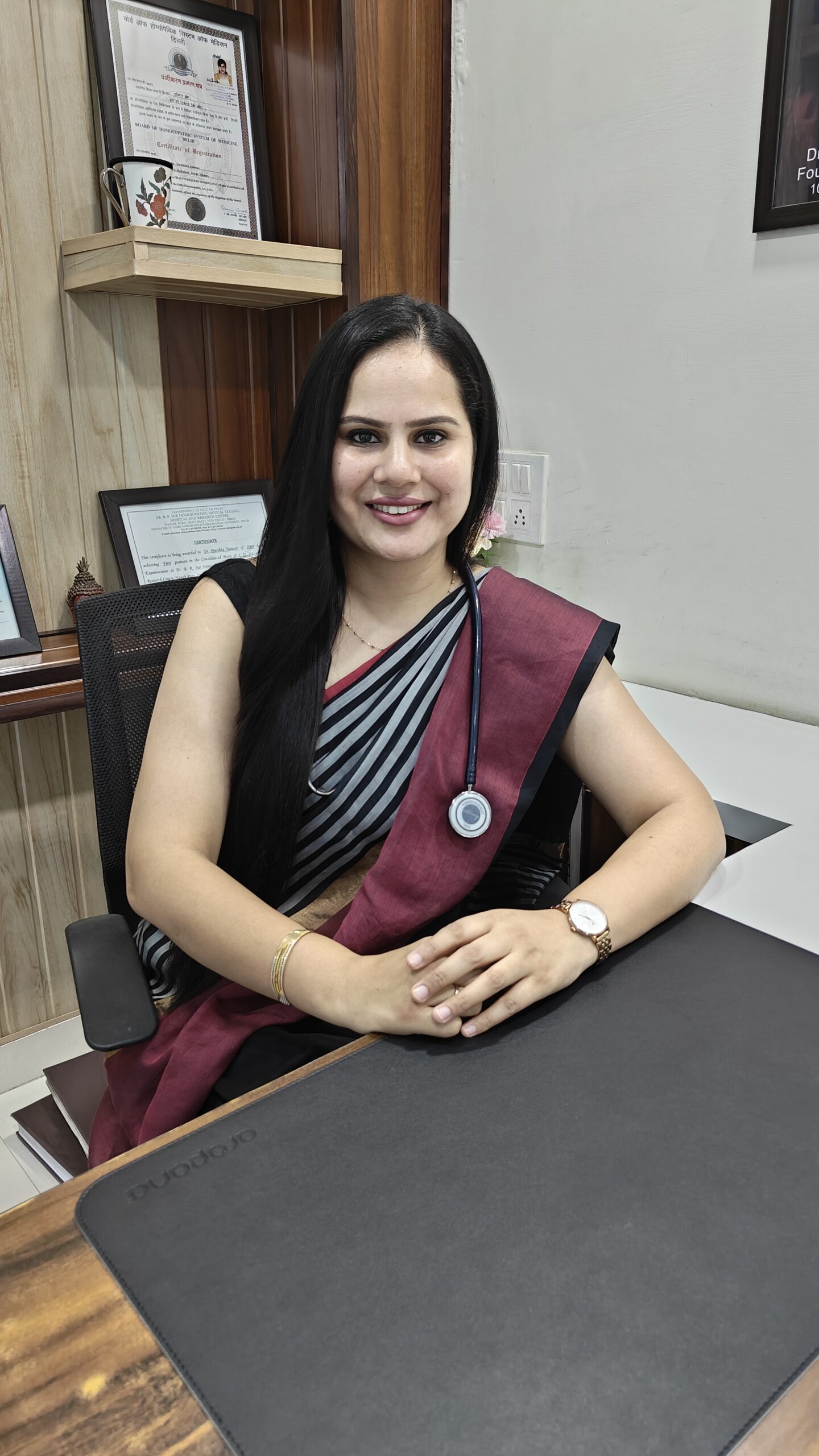
A good consultation starts with listening. At Pratibha Homeopathic Clinic in Tagore Garden, New Delhi, Dr. Pratibha Tanwar follows the classical homeopathic approach, which looks at the patient as a whole and tries to work on the root cause, not only the symptom.
Here is how you can prepare:
- Bring your reports. Carry your latest HbA1c, fasting sugar and any other lab results.
- List every medicine you take. Include insulin, tablets, vitamins and any herbal products.
- Be ready to talk. The doctor will ask about your food, sleep, stress, family history, past illnesses and daily routine.
- Ask questions. Ask what homeopathy can and cannot do for your case, and how long before you review progress.
- Keep your diabetes doctor in the loop. Share what you are doing with both doctors.
Dr. Pratibha Tanwar is a gold medalist BHMS doctor, and her clinic lists diabetes among the chronic conditions she works on. You can book a visit at the clinic or take an online consultation from anywhere.
Frequently Asked Questions
Can diabetes treated by homeopathic treatment?
No. There is no proven cure for diabetes, and there is no strong evidence that homeopathy cures it. Homeopathy can be used as supportive care alongside your doctor’s plan. Diet, exercise, weight control and the medicines your doctor prescribes remain the base of treatment.
Can I stop my diabetes medicines if I take homeopathy?
No. Never stop, reduce or change your diabetes medicines on your own. Stopping them can push your blood sugar dangerously high, and type 1 diabetes needs insulin every day. Any change must come from your diabetes doctor after checking your reports.
What is a normal blood sugar level?
A normal fasting blood sugar is below 100 mg/dL. A normal HbA1c is below 5.7%, and a normal 2-hour glucose tolerance result is below 140 mg/dL. Values above these may mean prediabetes or diabetes, so confirm with your doctor.
What are the first signs of diabetes?
The first signs are often strong thirst, passing urine more often, tiredness, blurred vision and weight loss without trying. Many people with type 2 diabetes have mild symptoms or none, so a blood test is the only sure way to know.
Can type 2 diabetes be prevented?
Often it can be prevented or delayed. WHO says a healthy weight, at least 150 minutes of moderate exercise a week, a healthy diet and no tobacco can help. Type 1 diabetes cannot be prevented, because its cause is not known.
What is prediabetes?
Prediabetes means your sugar is higher than normal but not yet in the diabetes range. An HbA1c of 5.7% to 6.4%, or a fasting sugar of 100 to 125 mg/dL, falls in this zone. It is a warning stage, and lifestyle changes can often bring sugar back to the normal range.
Who should get tested for diabetes?
Adults with risk factors should ask their doctor about testing. These include a parent or sibling with diabetes, extra weight, low activity and high blood pressure. The NHS also lists South Asian people as a higher-risk group from the age of 25.
Final Thoughts
Diabetes is a long journey, but it is a manageable one. The tools that work best are not secret: regular tests, a plate with more vegetables and pulses, daily movement, a healthy weight, and the medicines your doctor prescribes.
Homeopathy can have a place as supportive care, as long as it sits beside this plan and not in place of it. Be careful with anyone who promises a quick cure.
If you want to talk through your case, Dr. Pratibha Tanwar sees patients at her clinic in Tagore Garden, New Delhi, and online. Book your appointment or call +91-7827525956. Please carry your latest sugar reports and a list of your medicines.
About the Author
Dr. Pratibha Tanwar, BHMS (Gold Medalist) is a homeopathic doctor in Delhi. She completed her BHMS with honours in 2010 from Dr. B. R. Sur Homoeopathic Medical College, Hospital and Research Centre, New Delhi, and served there as a house physician for one year. She also completed the SCPH specialty course in Predictive Homoeopathy from ICHM. Her clinic lists skin, hair, diabetes and other chronic conditions among her areas of work. Read more on the About the Doctor page.
Medical Disclaimer
This article is for education only. It is not a diagnosis or a substitute for advice from your own doctor. Do not stop or change any diabetes medicine without talking to your diabetes doctor. If you think you have a medical emergency, go to the nearest hospital or call 112. See our full Medical Disclaimer and Editorial Policy.
Sources
- WHO: Diabetes fact sheet (14 November 2024)
- American Diabetes Association: Diabetes diagnosis
- American Diabetes Association: Low blood glucose
- NHS: Symptoms of type 2 diabetes
- NHS: Complications of type 2 diabetes
- ICMR-INDIAB study, The Lancet Diabetes & Endocrinology, 2023 and South First report on the study
- ICMR-NIN Dietary Guidelines for Indians 2024, South First report
- NHMRC 2015 homeopathy review, CBC News report and Homeopathy Research Institute analysis of the review