
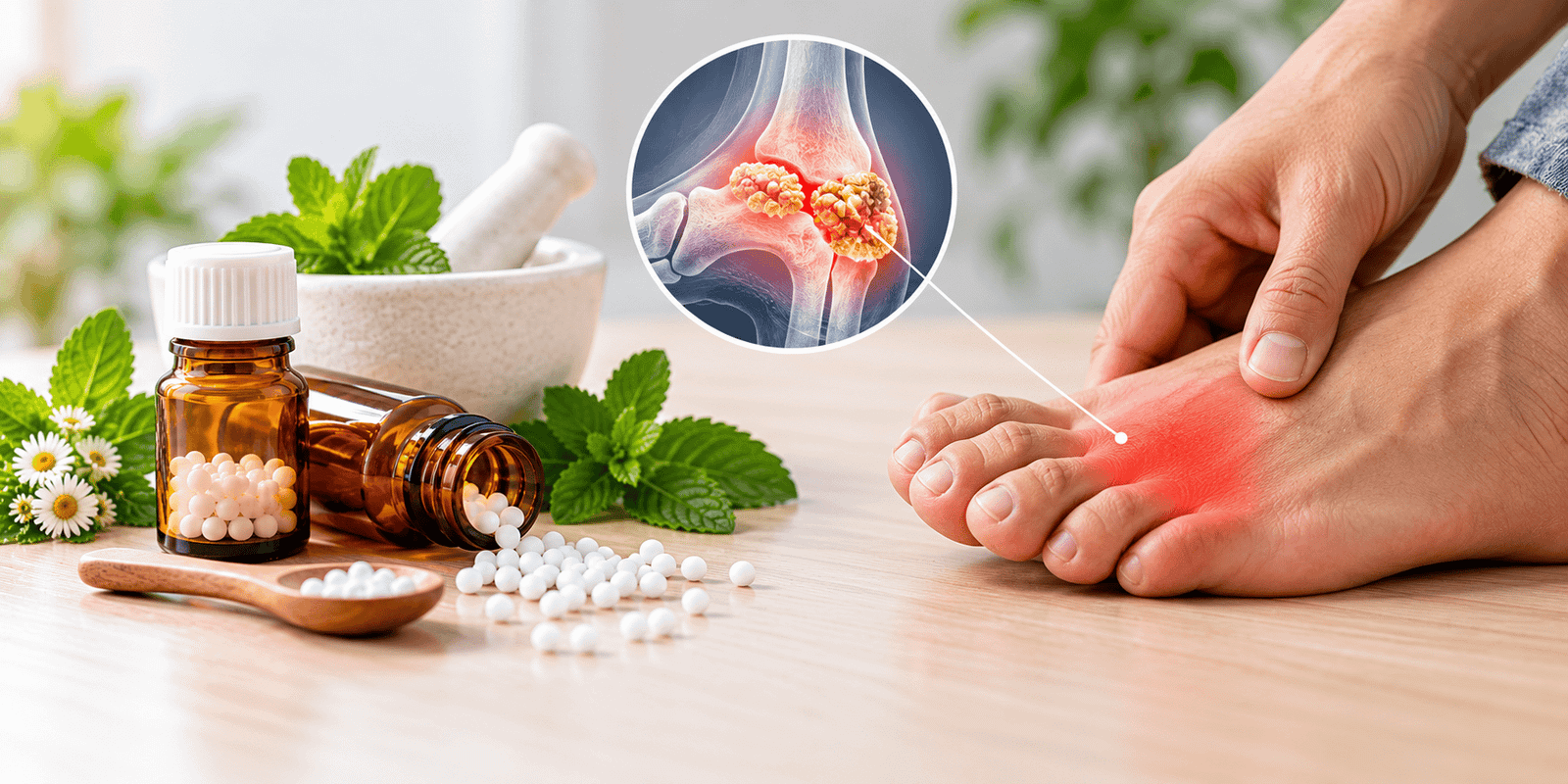
Your blood report says “uric acid: high”, and suddenly everyone at home has advice. Stop dal. Stop palak. Drink this juice. Take that powder. It is easy to feel confused and scared.
One question we often hear from patients is: can homeopathy bring my uric acid down?
This guide gives you an honest answer in simple words. You will also learn what uric acid is, what the normal range is, which symptoms to watch for, what to eat, and when to see a doctor.
Can Homeopathy Treat High Uric Acid?
Homeopathy can be used as supportive care next to your doctor’s treatment, but it should never replace the gout or uric acid-lowering medicines your doctor has prescribed. Research on homeopathy for high uric acid and gout is limited, and one placebo-controlled trial in gout patients found no extra benefit from adding it to usual care. What is proven to help is a better diet, more water, a healthy weight, less alcohol and sugary drinks, regular tests and, when needed, medicines.
Key points to remember:
- High uric acid (hyperuricemia) means too much uric acid in the blood. Many people with high levels never get gout.
- Gout is a sudden, very painful swelling of a joint, most often the big toe.
- A blood test measures uric acid. For people with gout, the usual treatment target is 6 mg/dL or lower, says the American College of Rheumatology.
- Red meat, organ meats, shellfish, alcohol and sugary drinks raise the risk. You do not need to give up dal, spinach or other vegetables.
- Never stop gout medicines on your own, and get urgent help for a hot, swollen joint with fever.
What Is Uric Acid?
Uric acid is a waste product that your body makes when it breaks down chemicals called purines. According to MedlinePlus, purines come from your own cells and from some foods and drinks.
Normally, uric acid dissolves in your blood. Your kidneys filter it out, and it leaves your body in urine. Think of sugar in a glass of water. A little dissolves easily, but if you keep adding more, crystals settle at the bottom.
The same thing can happen in your body. If you make too much uric acid, or your kidneys remove too little, it builds up in the blood. It can then form needle-shaped crystals in and around your joints. That painful condition is called gout.
Normal Uric Acid Level
Most labs report a normal uric acid level of about 3.4 to 7.0 mg/dL in men and 2.4 to 6.0 mg/dL in women. Ranges differ a little from lab to lab, so always compare your number with the range printed on your own report.
| Group | Usual lab range | Counted as high |
| Adult men | 3.4 to 7.0 mg/dL | Above 7.0 mg/dL |
| Adult women | 2.4 to 6.0 mg/dL | Above 6.0 mg/dL |
| People with gout on treatment | Not applicable | Target is 6 mg/dL or lower, says the American College of Rheumatology |
A high number is a warning, not a diagnosis. NIAMS says many people with high urate levels never develop gout, and MedlinePlus says a high result does not always mean you need treatment. Your doctor will look at your whole health picture.
High Uric Acid in India: What Studies Show
High uric acid is common in India, and many people find out only from a routine report. Two Indian studies show the picture:
- A 2024 community study in rural Belagavi, Karnataka, tested 300 adults aged 30 and above. High uric acid was found in 32.7% of them. A bigger waist and frequent meat eating were linked to higher levels.
- A study of 197,097 people at screening camps in 592 locations across India found that high uric acid was more common in men and rose with age.
High uric acid also tends to travel with other conditions. NIAMS lists high blood pressure, kidney disease, obesity and diabetes among the problems seen in people with gout.
So a high uric acid report is a good moment to check your blood pressure, sugar and cholesterol too. Our guides on diabetes and cholesterol can help.
Symptoms of High Uric Acid and Gout
High uric acid on its own usually causes no symptoms. NIAMS describes a stage where urate is high and crystals may already be present, but you feel nothing. Trouble starts when crystals set off a gout attack. The NHS lists these signs:
- Sudden, severe pain in one joint, most often the big toe. Other joints in the feet, ankles, hands, wrists, elbows and knees can be hit too.
- Hot, swollen, red skin over the joint. On brown or black skin the redness can be harder to see.
- Attacks often start at night, and the pain can wake you up.
- Without treatment, an attack usually lasts 1 to 2 weeks and then settles.
Other signs to know about:
- Hard lumps under the skin (tophi) near the joints, fingers, elbows or ears. These can appear after years of untreated gout.
- Signs of a kidney stone. MedlinePlus lists sharp pain in the side, back or groin, blood in the urine, and pain while passing urine.
Many people with high uric acid have none of these. And joint pain does not always mean gout, so a doctor should confirm the cause.
Causes and Risk Factors
High uric acid happens when your body makes too much of it, or your kidneys remove too little. MedlinePlus, NIAMS and the NHS list these causes and risk factors:
- Purine-rich foods. Red meat, organ meats such as liver and kidney, and some seafood such as sardines, anchovies and shellfish.
- Alcohol. All types of alcohol can raise uric acid, and beer is a well-known trigger for gout attacks.
- Sugary drinks and sweets. Fructose, found in sodas and many sweetened foods, adds to the load.
- Extra weight. Being overweight raises the risk. Our post on weight and metabolism may help.
- Family history, age and sex. Gout is more common in men, and a woman’s risk rises after menopause.
- Kidney problems. When the kidneys cannot remove uric acid well, levels climb.
- Other health conditions. High blood pressure, diabetes, high cholesterol and metabolic syndrome often come with high uric acid. See our posts on diabetes and cholesterol.
- Some medicines. Water tablets (diuretics) can raise uric acid. Never stop a medicine on your own. Ask your doctor.
- Attack triggers. The NHS lists dehydration, a very large meal, drinking too much alcohol, a joint injury and an illness with high fever.
Most of these are in your hands: food, drink, weight and water are the levers you can pull today.
How Is High Uric Acid Diagnosed?
A simple blood test measures your uric acid. The NHS says a doctor may ask about your diet and alcohol, and may check how much uric acid is in your blood. These are the common tests:
- Blood test (serum urate). It finds high uric acid and tracks it during treatment. Any lab can do it.
- Joint fluid test. If the diagnosis is unclear, the doctor may take a small sample of fluid from the swollen joint and look for urate crystals under a microscope.
- 24-hour urine test. Sometimes done to check the risk of kidney stones, says MedlinePlus.
Tell your doctor about every medicine you take, because some medicines change uric acid results. Do not stop any medicine without asking first.
Remember that a high number does not always mean gout. The American College of Rheumatology says gout is diagnosed from your history, a physical exam, lab tests, imaging and, sometimes, joint fluid.
How Does Homeopathy Approach High Uric Acid?
Homeopathy looks at the whole person, not just the number on the lab report. In classical homeopathy, the doctor takes a detailed case history. This covers your uric acid reports, joint pain pattern, food, water and alcohol habits, sleep, stress, family history and other illnesses. Treatment is then chosen for you as an individual.
In high uric acid, the aim is to support your overall health and help you follow the diet and lifestyle changes that matter, while you continue your regular care. It is not meant to push you away from your doctor or your tests.
What does the research say?
The evidence is limited, and not all of it is positive.
- In one randomised, placebo-controlled trial, 60 gout patients received individualised homeopathy on top of usual care. The researchers found no evidence that it was better than placebo for quality of life.
- A few small Indian trials have looked at high uric acid, including a 60-patient placebo-controlled trial and a 90-patient pilot trial. The authors of the first one note that high-quality research in this area remains scarce.
- In 2015, Australia’s National Health and Medical Research Council reviewed 225 studies and concluded that there is no reliable evidence that homeopathy works for any health condition. Homeopathy researchers have criticised that review.
What does this mean for you? Treat homeopathy as an add-on at most. Keep your tests, your diet changes and any medicine your doctor has prescribed.
What Homeopathy Cannot Do for High Uric Acid
Homeopathy cannot replace the medicines that lower uric acid or treat a gout attack. The NHS says that if you have frequent attacks or high uric acid, you may need uric acid-lowering medicine, and that it is important to take it regularly even when you have no symptoms. Please keep these points in mind:
- Do not stop or skip your gout medicines. Gout can come back more often if it is not treated.
- It cannot treat a gout attack on its own. A very painful, hot, swollen joint needs a doctor. Untreated gout may cause lasting damage to the joints.
- It cannot treat a joint infection. Sudden pain and swelling with fever or feeling sick needs urgent medical help.
- Kidney stone pain needs a doctor. Sharp pain in the side or back, or blood in the urine, should be checked at once.
- Do not trust “uric acid cure” claims. No juice, powder or remedy can cure high uric acid in a few weeks. Mayo Clinic says even a gout diet is not a cure.
- Do not skip tests. Regular uric acid, kidney, blood pressure, sugar and cholesterol checks keep you safe.
NHMRC gave a similar warning in its homeopathy review: people who choose homeopathy may put their health at risk if they reject or delay treatment that has good evidence behind it.
Diet Tips for High Uric Acid: An Indian Plate
Diet helps, but it is not a cure. Mayo Clinic says people with gout who follow a gout diet most often still need medicine. But the right food choices can lower the risk of new attacks and slow joint damage. Here is a simple Indian plate guide:
| Cut down on | Eat freely |
| Red meat (mutton, beef, pork) and organ meats such as liver and kidney (kaleji) | Dal, rajma, chana, lobia and other legumes |
| Shellfish, sardines, anchovies and other high-purine seafood | Vegetables, including spinach (palak), green peas and mushrooms |
| Alcohol, especially beer | Low-fat milk and curd |
| Sodas, packaged juices, sweets and sugary tea | Whole grains such as roti and millets, and fruit in sensible portions |
| Meat gravies and rich soups | Plenty of water through the day |
Myth: you must stop dal and palak
Many people are told to give up dal, spinach and other vegetables. Studies do not support this. A 12-year study of 47,150 men in the New England Journal of Medicine found that more meat and seafood raised the risk of gout, while purine-rich vegetables and total protein did not. Dairy lowered the risk. Mayo Clinic also lists beans, chickpeas and lentils as good protein choices, and says high-purine vegetables like green peas and spinach do not raise gout risk.
Habits that help
- Drink enough water. The NHS advises plenty of fluids to avoid dehydration.
- Keep alcohol low. Have some alcohol-free days, and try not to drink more than 14 units a week. Mayo Clinic says to avoid alcohol during a gout attack.
- Lose weight slowly. Mayo Clinic says losing weight may lower uric acid and the number of attacks. The NHS warns against crash diets.
- Go easy on fruit juice and sugar. Mayo Clinic advises limiting fruit juice, even with no added sugar.
- Ask before taking supplements. Check with your doctor before using any supplement, including vitamin C.
A registered dietitian can turn this into a daily plan. If you also have diabetes, see our guide on homeopathic treatment for diabetes.
Lifestyle Habits and What to Do During a Gout Attack
Small daily habits lower the chance of attacks. The NHS lists these:
- Reach a healthy weight. Aim for slow, steady loss and avoid crash diets.
- Stay hydrated. Keep a water bottle with you through the day.
- Exercise regularly. Choose walking or cycling, and avoid very intense exercise or heavy pressure on the joints.
- Quit smoking.
- Skip sugary drinks and snacks.
- Review your medicines. Ask your doctor whether any medicine you take regularly can raise uric acid.
For other joint problems, see our posts on arthritis and pain and inflammation.
During a gout attack
If an attack starts, the NHS advises:
- Take any medicine your doctor has prescribed as soon as possible. It should start to work within 2 days.
- Rest the joint and raise it.
- Keep it cool with an ice pack or a bag of frozen peas, wrapped in a towel, for up to 20 minutes at a time.
- Drink plenty of water, unless your doctor has told you not to.
- Keep bedclothes off the sore joint at night, and do not put pressure on it.
Act early. If you feel an attack starting, get treatment immediately.
Complications and When to See a Doctor
If high uric acid and gout are not controlled, they can cause lasting harm. The NHS lists joint damage, hard lumps called tophi under the skin, kidney stones and, rarely, chronic arthritis. NIAMS adds that gout often comes with kidney disease, high blood pressure, diabetes and heart problems.
| Situation | What to do |
| High uric acid on a report, with no symptoms | Book a normal visit. Share the report and ask about blood pressure, sugar, cholesterol and kidney tests |
| A first sudden, painful, hot, swollen joint | See a doctor soon for a proper diagnosis |
| Gout attacks keep coming, or your usual treatment is not helping | See your doctor to review your plan |
| Hard lumps under the skin near joints, fingers, elbows or ears | See your doctor. These can be tophi |
| Sudden joint pain and swelling that is getting worse, with high fever, shivering or feeling sick | Urgent. It could be an infection inside the joint. Get medical help the same day |
| Sharp pain in the side, back or groin, blood in the urine, or trouble passing urine | Urgent. It could be a kidney stone. Go to a doctor or hospital at once |
What to Expect in a Homeopathy Consultation for High Uric Acid
A good consultation starts with listening. At Pratibha Homeopathic Clinic in Tagore Garden, New Delhi, Dr. Pratibha Tanwar follows the classical homeopathic approach, which looks at the patient as a whole and tries to work on the root cause, not only the symptom.
Here is how you can prepare:
- Bring your uric acid reports. Carry the latest one and older ones, so the trend is clear.
- List every medicine you take. Include gout medicines, BP tablets, painkillers, vitamins and any herbal products.
- Carry related reports. Kidney function, sugar, cholesterol and blood pressure readings help the doctor see the full picture.
- Be ready to talk. Expect questions about your food, water intake, alcohol, weight, joint pain pattern, sleep and family history.
- Ask what to expect. Ask what homeopathy can and cannot do for your case, and when your progress will be reviewed.
- Keep your regular doctor informed. Share your homeopathic plan with them, and theirs with us.
Dr. Pratibha Tanwar is a gold medalist BHMS doctor and sees patients at the clinic and online. You can book a visit or take an online consultation from anywhere.
Frequently Asked Questions
Can uric acid be treated by homeopathic treatment?
No. Homeopathy has not been shown to lower uric acid reliably, so it should not be used instead of proven treatment. It may be used as supportive care alongside your doctor’s plan. Diet, water, weight control and prescribed medicines remain the base of treatment.
Can I stop my uric acid medicine if I take homeopathy?
No. Never stop, reduce or skip your uric acid or gout medicines on your own. Gout can come back more often if it is not treated. Any change must come from the doctor who prescribed them, after checking your reports.
What is a normal uric acid level?
Most labs show about 3.4 to 7.0 mg/dL for men and 2.4 to 6.0 mg/dL for women. For people with gout, the usual treatment target is 6 mg/dL or lower. Lab ranges differ a little, so check the range on your own report.
What are the symptoms of high uric acid?
High uric acid usually has no symptoms. When crystals form in a joint, it causes sudden, severe pain, heat, swelling and redness, most often in the big toe. Long-standing high levels can also cause kidney stones and hard lumps under the skin.
Which foods should I avoid with high uric acid?
Limit red meat, organ meats such as liver and kidney, shellfish, sardines and anchovies, alcohol (especially beer), and sugary drinks and sweets. You do not need to give up dal, vegetables or milk products.
Can I eat dal and spinach if my uric acid is high?
Yes, in normal amounts. Studies show that purine-rich vegetables and legumes do not raise gout risk the way meat and seafood do. If you have kidney disease or your doctor gave you special diet advice, follow that advice.
Does high uric acid always cause gout?
No. NIAMS says many people with high uric acid never develop gout. But high levels raise the risk, so it is wise to see your doctor, check related conditions like blood pressure and diabetes, and fix your diet and habits.
How can I lower uric acid naturally?
Drink enough water, limit red meat, organ meats, shellfish, alcohol and sugary drinks, and lose weight slowly if you are overweight. Mayo Clinic says diet alone is often not enough to treat gout, so follow your doctor’s advice on tests and medicines.
Final Thoughts
High uric acid is common and often silent, so many people ignore it until a joint is on fire. The steps that work are clear: test regularly, drink enough water, cut back on red meat, organ meats, alcohol and sugary drinks, keep a healthy weight, and take the medicines your doctor prescribes.
Homeopathy can have a place as supportive care, as long as it sits beside this plan and not in place of it. Be careful with anyone who promises a quick cure.
If you want to talk through your case, Dr. Pratibha Tanwar sees patients at her clinic in Tagore Garden, New Delhi, and online. Book your appointment or call +91-7827525956. Please carry your uric acid reports, other recent test reports and a list of your medicines.
About the Author
Dr. Pratibha Tanwar, BHMS (Gold Medalist) is a homeopathic doctor in Delhi. She completed her BHMS with honours in 2010 from Dr. B. R. Sur Homoeopathic Medical College, Hospital and Research Centre, New Delhi, and served there as a house physician for one year. She also completed the SCPH specialty course in Predictive Homoeopathy from ICHM. Her clinic lists skin, hair, diabetes and other chronic conditions among her areas of work. Read more on the About the Doctor page.
Medical Disclaimer
This article is for education only. It is not a diagnosis or a substitute for advice from your own doctor. Do not stop or change any gout or uric acid medicine without talking to the doctor who prescribed it. If you think you have a medical emergency, go to the nearest hospital or call 112. See our full Medical Disclaimer and Editorial Policy.
Sources
- NHS: Gout
- MedlinePlus: Uric acid test (updated 15 July 2026)
- NIAMS: Gout
- American College of Rheumatology: Gout (patient page) (updated February 2025)
- Mayo Clinic: Gout diet, what’s allowed, what’s not (2 April 2025)
- Purine-rich foods, dairy and protein intake, and the risk of gout in men, New England Journal of Medicine, 2004
- Prevalence of hyperuricemia in a rural area of Belagavi, India, National Journal of Community Medicine, 2024
- Hyperuricemia in Indian subjects attending screening camps, retrospective study
- Individualised homeopathy as an adjunct in gout, randomised placebo-controlled trial, 2017
- Individualised homeopathic medicines in hyperuricemia, double-blind placebo-controlled trial, Homeopathy, 2023 and pilot trial, 2021
- NHMRC 2015 homeopathy review, CBC News report and Homeopathy Research Institute analysis of the review