The first white patch is easy to miss. It may be on the hand, near the lips or around the eyes. A few weeks later there are two more. Then the questions begin. Is it a fungus? Is it a deficiency? Will people think it is contagious? Why me?
If you or someone in your family has vitiligo (called safed daag or leucoderma in many homes), this guide answers the questions people ask us most, in plain language and without false promises.
Quick Answer: Can Homeopathy Treat Vitiligo?
Homeopathy may be used as supportive care for people with vitiligo, but there is no strong scientific proof that it brings back skin colour. Vitiligo is a long-term condition. Proven options such as light therapy, skin medicines and, for stable patches, surgery are given by skin specialists. Please be careful of any promise of a guaranteed cure.
- Vitiligo happens when the cells that make skin colour (melanocytes) stop working or are lost.
- It is not contagious, and it is not leprosy.
- It is linked with the immune system, genes and other factors, and not with food combinations such as milk with fish.
- Some people have other conditions, such as thyroid disease, so a basic check-up is worthwhile.
- Starting care early matters, especially when the patches are spreading.
What Exactly Happens in Vitiligo?
Your skin colour comes from a pigment called melanin, made by melanocytes. In vitiligo, these cells are destroyed or stop working in certain areas. Without melanin, the skin turns milky white. Hair growing from that skin can also turn white.
Researchers believe several things play a part: genes, an overactive immune system that attacks the pigment cells, and stress on the cells, called oxidative stress. In some segmental cases, the nerves of the skin may also be involved. No single cause explains every case.
Is Vitiligo Contagious? Is It Leprosy?
No, and no. You cannot catch vitiligo by touching, hugging, eating together or sharing clothes. It is also not leprosy, although the two have been confused for generations. A research article on Indian patients notes that this confusion, together with social taboos, causes real psychological stress for patients.
If someone in your family or workplace treats it as “infectious”, please share this paragraph with them. The stigma often hurts more than the patch.
How Common Is Vitiligo in India?
Quite common, and the numbers vary a lot between regions.
| Finding | What the studies report |
|---|---|
| Share of skin clinic patients in India | Roughly 0.25% to 4% |
| Higher-prevalence areas | Up to about 8.8% reported in Gujarat and Rajasthan |
| Large study across 21 states | 0.89% across 30 medical colleges, with more than 4,43,000 patients |
| Worldwide | Around 0.5% to 1% of the population |
These numbers come from skin clinics and hospitals, so they do not describe the whole population exactly. But they show that you are far from alone.
Types of Vitiligo
Dermatologists mostly divide vitiligo into two groups.
| Type | Pattern | Good to know |
|---|---|---|
| Non-segmental (most common) | Patches on both sides of the body, often hands, feet, face, around the eyes and mouth | Can be stable or active. Often linked with other immune conditions |
| Segmental | Patches on one side or one area of the body | More common in children. It usually spreads for a while and then settles |
Will It Spread?
This is the question everyone asks, and the honest answer is: it depends on whether your vitiligo is active or stable.
| Active (unstable) vitiligo | Stable vitiligo | |
|---|---|---|
| What you see | New patches, or old ones growing | No new patches and no growth for a long period |
| Clues | Tiny confetti-like spots near the edges, or new patches after a cut or burn | Clear, sharp borders and no change over months |
| Why it matters | Needs close follow-up with a skin specialist | Surgery may be considered when patches do not respond to other care |
New patches appearing on skin that was injured, such as a cut, burn or scrape, are well known in vitiligo. So protect your skin from unnecessary injury.
Why Do I Have It? Common Triggers and Risk Factors
- Family history. Vitiligo and other immune conditions can run in families
- Other immune conditions, such as thyroid disease, type 1 diabetes, an immune hair-loss condition called alopecia areata, and pernicious anaemia
- Skin injury, including cuts, burns and repeated friction
- Long, direct contact with certain chemicals, for example some phenol-containing products
- Stress, which many people say came before their first patch. Our guide on stress may help
Please note that vitiligo is not caused by eating curd, fish or sour food together. There is no good evidence for that popular belief.
Which Tests Are Worth Doing?
Because vitiligo is linked with other immune conditions, doctors often suggest a few simple checks, especially if you feel unusually tired or have other symptoms:
- Thyroid tests. Thyroid problems are one of the most common companions. See our guide on thyroid health
- Blood sugar. Read about diabetes if you are at risk
- Basic blood counts and vitamin levels, if your doctor advises
- A look under a special light (Wood’s lamp) in clinic, which helps the doctor see the patches clearly
What Skin Specialists Can Offer
Care depends on the type, the area, whether it is active, and your age. Skin specialists may use light therapy, medicines applied to the skin, and in some cases medicines taken by mouth to stop the spread. For stable patches that do not improve, surgical options such as skin grafting can be considered. Results vary from person to person, and the face and neck often respond better than hands and feet.
Please do not apply random herbal pastes or “miracle” oils. Some can burn the skin and make patches worse.
How Does Homeopathy Approach Vitiligo?
In classical homeopathy, the doctor spends time on your complete history: when the first patch appeared, what was happening in your life, your stress, sleep, digestion, and family history of thyroid, diabetes or skin problems. The plan is individual, so two people with vitiligo may get different advice.
The goal is to support your overall health and general well-being while you follow your skin specialist’s plan, and to help you feel supported during a long journey.
What does the research say? The evidence is limited. A large 2015 review by Australia’s NHMRC found no reliable evidence that homeopathy works for any health condition. Homeopathy researchers have questioned how it was done, but strong studies on vitiligo are few and small. We explain this in our post on diabetes. So please treat homeopathy as an add-on.
What Homeopathy Cannot Do for Vitiligo
- It cannot promise that colour will return, or that new patches will never appear.
- It cannot replace light therapy or surgery when your skin specialist recommends them.
- It cannot treat an underlying thyroid problem in place of proper tests and medicines.
- It should not delay a check-up if patches are spreading fast.
Protecting Your Skin and Your Mind
- Use sunscreen on the white patches. They have little pigment, so they sunburn easily. A sunburn can make things worse.
- Avoid injury to the skin. Be careful with waxing, harsh scrubs, tattoos and tight rubbing straps over patches.
- Be gentle with products. Choose mild, fragrance-free ones and patch-test first.
- Eat a balanced diet with vegetables, pulses, fruit, nuts and enough protein. No single food can cause or cure vitiligo.
- Look after your mind. Many people feel conscious, low or anxious. Talk to someone you trust. If these feelings stay, speak to a doctor or counsellor.
Red Flags: When to See a Doctor Soon
| What you notice | What to do |
|---|---|
| New white patches appearing quickly or existing ones spreading | See a skin specialist soon |
| White patches that are also itchy, scaly, numb or painful | Get them checked. It may be a different skin condition |
| Patches on a child | See a skin specialist early |
| Tiredness, weight changes, feeling cold or hot, hair fall | Ask for thyroid and other blood tests |
| Persistent sadness, shame or avoiding people because of the patches | Talk to a doctor or counsellor. You deserve support |
What to Expect in a Homeopathy Consultation for Vitiligo
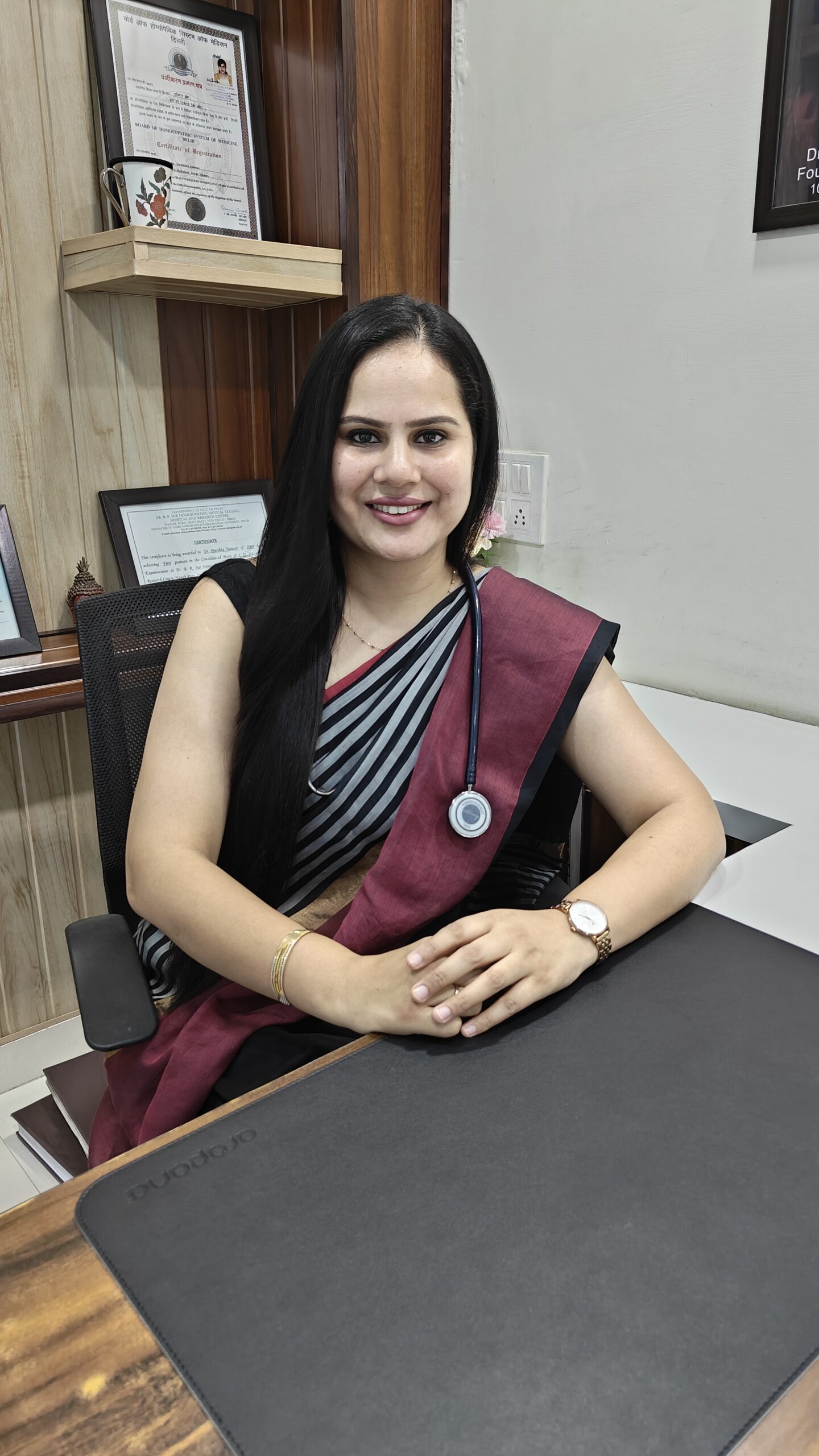
At Pratibha Homeopathic Clinic in Tagore Garden, New Delhi, Dr. Pratibha Tanwar follows the classical approach. To prepare:
- Take clear photos of the patches today, and then every month. Photos are the best way to track change.
- Bring any reports, especially thyroid and blood sugar.
- List every cream, tablet and supplement you use.
- Note any injuries, stress events or new products around the time patches began.
- Ask what homeopathy can and cannot do, and how long before you review progress.
Frequently Asked Questions
Can homeopathy cure vitiligo?
There is no known permanent cure for vitiligo, and no strong evidence that homeopathy cures it. Homeopathy can be used as supportive care next to your skin specialist’s plan. Please avoid anyone who guarantees full recovery.
Is vitiligo contagious?
No. You cannot catch vitiligo from another person by touch, food, clothes or sharing a room. It is also not the same as leprosy.
Is vitiligo caused by eating fish and milk together?
No. There is no good evidence that eating certain foods together causes vitiligo. It is linked with genes, the immune system and other factors.
Can vitiligo patches go away on their own?
Colour can return in some people, especially in early or mild cases, but it is not predictable. Many patches stay, and some spread. Early review by a skin specialist gives you the best chance of stopping the spread.
Is vitiligo linked with thyroid problems?
Yes. People with vitiligo have a higher chance of thyroid disease and some other immune conditions, such as type 1 diabetes and alopecia areata. A simple thyroid test is often advised.
Should I use sunscreen with vitiligo?
Yes. White patches have little protection from the sun and burn easily. Sunscreen on exposed patches is a simple and useful habit.
Does vitiligo affect only the skin?
It mainly affects the skin and sometimes the hair, lips and the lining of the mouth. The bigger impact is often emotional, because of how others react. Support from family makes a big difference.
Final Thoughts
Vitiligo is a medical condition, not a flaw. Learn whether yours is active or stable, protect the skin, get the basic tests done, and work with a skin specialist for proven options. Photos, patience and support help more than any quick fix.
If you would like to discuss your case, Dr. Pratibha Tanwar sees patients at her clinic in Tagore Garden, New Delhi, and online. Book your appointment, try an online consultation, or call +91-7827525956.
About the Author
Dr. Pratibha Tanwar, BHMS Gold Medalist is a homeopathic doctor in Delhi. She completed her BHMS with honours in 2010 from Dr. B. R. Sur Homoeopathic Medical College, Hospital and Research Centre, New Delhi, and served there as a house physician for one year. She also completed the SCPH specialty course in Predictive Homoeopathy from ICHM. Her clinic lists skin, hair, diabetes and other chronic conditions among her areas of work. Read more on the About the Doctor page.
Medical Disclaimer
This article is for education only. It is not a diagnosis or a substitute for advice from your own doctor. Please do not stop or change any prescribed treatment without talking to your doctor. If you feel hopeless or unable to cope, please reach out to a doctor or a trusted person today. See our full Medical Disclaimer and Editorial Policy.
Sources
- PubMed Central: Vitiligo, an Indian clinical study
- Tata 1mg: Vitiligo overview
- NHMRC 2015 review of homeopathy, discussed in our diabetes guide